Why Sewage Backup Cleanup Needs a Public Health Unit Inspection
Why Sewage Backup Cleanup
Needs a Public Health Unit Inspection in Canada
Sewage backup isn’t just a mess—it’s a biohazard. A public health unit inspection is required because raw sewage carries bacteria, viruses, and parasites that can cause serious illness. In Canada, local health authorities set the rules for safe cleanup. For example, Ontario’s public health units mandate inspections after any sewage backup in a home. British Columbia requires them when contamination affects rental properties or food premises. Without that inspection, you risk fines and health code violations.
“Every sewage backup case we handle starts with a call to the local health unit. Skipping that step can void insurance coverage.”
Regional conditions change the answer. In older cities like Montreal or Vancouver, aging sewer lines increase backup risks. Heavy rains in Atlantic Canada or Prairie hail can overwhelm systems. Provincial rules vary—Quebec and Alberta require mold remediation licensing, while Manitoba focuses on floodplain regulations. The Canadian Environmental Protection Act governs disposal of contaminated debris. Always check your local health unit before starting cleanup.
Main body
When raw sewage backs up into a basement or main floor, the health risks go far beyond what a mop and bleach can handle. In Canada, pathogens like E. coli, hepatitis A, and norovirus can linger in porous materials long after the water recedes. That is why a public health unit inspection is not just a bureaucratic step — it is a critical safety checkpoint that determines whether a property is truly safe to occupy again.
What a Public Health Unit Actually Checks
Public health inspectors focus on biological hazards, not structural damage. They test for fecal coliform bacteria, assess airborne pathogen levels, and verify that contaminated materials have been removed properly.
Their authority comes from provincial health acts. In Ontario, the Health Protection and Promotion Act gives inspectors the power to issue orders for evacuation or mandatory cleanup. In British Columbia, local health authorities follow similar protocols under the Public Health Act.
“We see homeowners try to dry out sewage-contaminated carpet. That is a biohazard, not a drying job.”
Here is what an inspector looks for:
- Complete removal of porous materials like drywall, insulation, and carpet
- Disinfection records showing the use of approved hospital-grade disinfectants
- Air quality tests after cleanup to confirm pathogen levels are safe
- Proper waste disposal — sewage debris cannot go in regular trash
Without this inspection, insurance companies may deny claims. And if you sell the property later, undisclosed sewage contamination can lead to legal liability.
Warning Signs You
Need an Inspection Now
You do not always see sewage backup. Sometimes it seeps through cracked foundation walls or backs up slowly into a floor drain. Watch for these red flags:
- Sewer gas smell that does not fade after cleaning
- Dark staining on drywall or baseboards near floor drains
- Mold growth appearing within 48 hours of a flood event
- Slow drains in multiple fixtures after heavy rain
If you notice any of these, stop cleanup immediately. Call a professional crew trained in sewage cleanup and contact your local public health unit. Delaying an inspection can turn a manageable problem into a full-scale biohazard remediation.
In older neighbourhoods in Halifax, NS or Charlottetown, PE, combined sewer systems are common. Heavy rain can overwhelm the system and push raw sewage into basements. That is when a health unit inspection becomes mandatory, not optional.
Cost Factors and Who Pays
The cost of sewage cleanup varies widely across Canada. Here is what drives the price:
- Extent of contamination — Category 3 water (sewage) requires full removal of affected materials
- Square footage affected — A flooded basement in Dartmouth, NS can cost $5,000 to $15,000
- Inspection fees — Public health unit inspections are often free, but private lab testing adds $300–$800
- Disposal costs — Transport Canada rules apply for cross-province waste movement
Insurance coverage depends on your policy. Standard homeowner policies often exclude sewer backup unless you have a specific endorsement. Check with the Insurance Bureau of Canada for guidance. If your claim is denied, the inspection report from the health unit becomes crucial evidence.
A health unit inspection can save you thousands. It documents the contamination level and proves you followed proper protocols.
Provincial Rules Are Not the Same
Each province has its own rules for sewage cleanup and public health involvement. Here is how they differ:
- Ontario — Local health units issue orders for mandatory cleanup. The *Ontario Building
Code* governs structural drying and repair standards.
- British Columbia — WorkSafeBC requires full PPE and training for crews.
Health authorities like Fraser Health inspect after major backups.
- Alberta — Mold remediation contractors need provincial licensing.
Sewage cleanup falls under occupational health and safety rules.
-
Quebec — The CNESST (workers’ compensation board) enforces strict protocols for biohazard cleanup.
-
Nova Scotia — Municipal permits are needed for structural repairs after sewage damage. The Nova Scotia Building Code applies.
-
Prince Edward Island — Smaller municipalities may not have dedicated health inspectors.
In that case, call the PEI Department of Health and Wellness.
The Canadian Environmental Protection Act regulates disposal of contaminated water. You cannot dump sewage-contaminated water into storm drains. That is a federal offence.
When to Call a Professional Crew
Do not attempt sewage cleanup yourself. The risk of infection is too high. Call a certified restoration company that follows IICRC standards for Category 3 water damage.
Here is when to pick up the phone:
- Any sewage backup — even a small amount
- Flooding from a failed septic system
- Backup after heavy rain in areas with combined sewers
- Slow drains with foul odour that persist after plunging
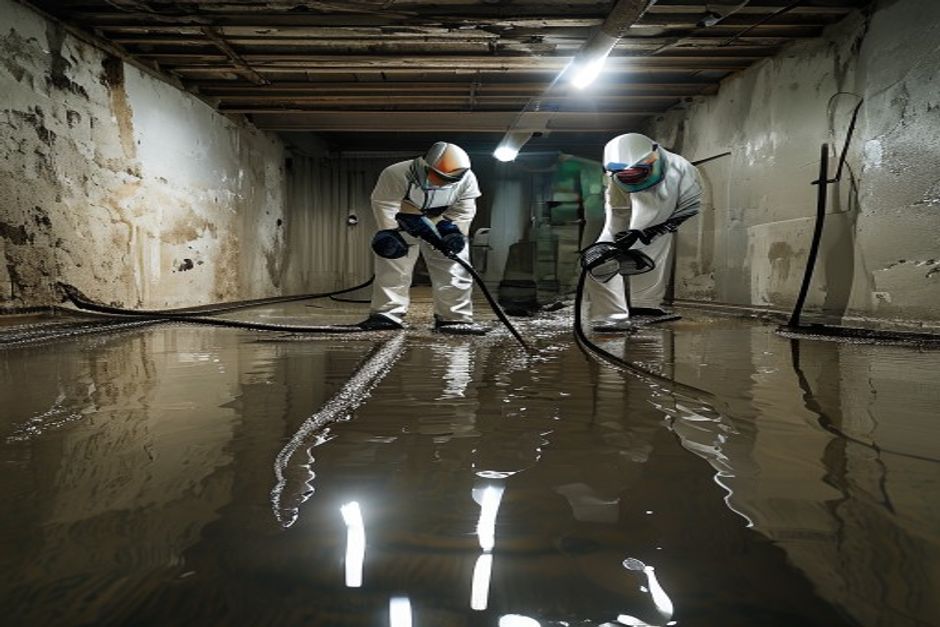
A professional crew will:
- Set up containment barriers to prevent cross-contamination
- Use HEPA vacuums and negative air machines
- Remove and dispose of all porous materials
- Apply antimicrobial treatments
- Coordinate with the public health unit for final inspection
If you are in Nova Scotia or Prince Edward Island, our teams handle the full process — from emergency water extraction to final health unit clearance. We know the local inspectors and the paperwork they require.
Do not wait. The longer sewage sits, the deeper it penetrates. Call Northern Flood Restore Canada today. We serve communities across the Maritimes, including Halifax, Dartmouth, Sydney, Truro, Charlottetown, Summerside, and more.
Why Sewage Backup Cleanup
Needs a Public Health Unit Inspection Across Canada
Sewage backup isn’t just a mess—it’s a public health risk. Without a proper inspection, you risk hidden contamination, failed code checks, and costly delays.
Local health rules vary by province. What passes in Ontario may fail in British Columbia. Always verify your local public health unit requirements before any cleanup begins.
One missed inspection can double your downtime and repair costs.
Delaying action leads to:
-
Structural damage that spreads fast.
-
Health hazards from bacteria and mold.
-
Rising costs as problems compound.
Contact Northern Flood Restore Canada for expert guidance. They know your local codes and can coordinate the required inspection. Don’t risk your property or safety—get the right inspection first.
Frequently Asked Questions
Need Nationwide Water Damage Restoration?
We connect you with trusted local providers in your province or city. Call or email us today.